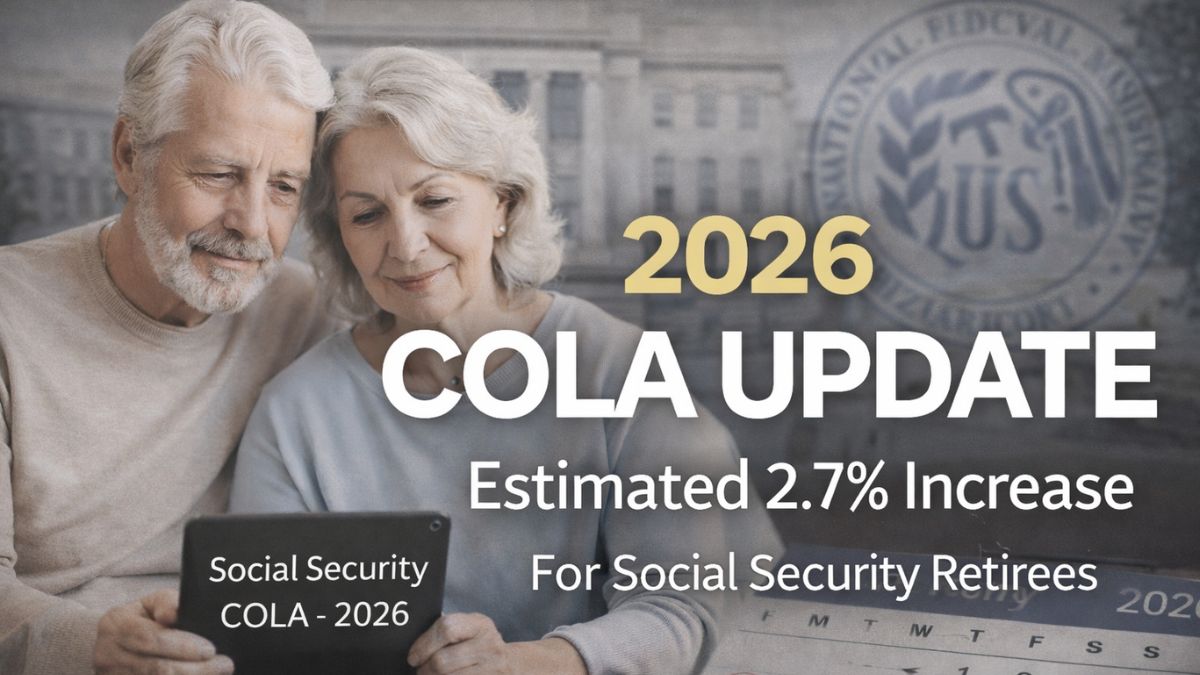
Many Americans who depend on Social Security are watching closely for news about the 2026 cost of living adjustment, also called COLA. This yearly increase is designed to help benefits keep up with inflation. Even though inflation has cooled compared to the sharp spikes seen in earlier years, everyday expenses are still high. Costs for housing, groceries, insurance, and medical care continue to put pressure on retirees, especially those living on fixed monthly payments. Current estimates suggest that Social Security benefits could rise by about 2.7 percent in 2026. While any increase is helpful, the real effect on household budgets may be smaller than many people expect.
What the 2026 COLA Estimate Means for Monthly Benefits
The projected 2.7 percent COLA for 2026 means monthly Social Security payments would increase slightly to reflect recent price changes. This adjustment is automatic and applies to retirement, disability, and survivor benefits. The purpose is to protect purchasing power so beneficiaries can continue to afford basic needs as prices rise.
However, a 2.7 percent adjustment is considered moderate. In years with high inflation, COLA increases have been much larger. Compared to those bigger jumps, the expected 2026 increase is relatively modest. For someone receiving an average monthly benefit, the raise would likely translate into a small monthly dollar increase rather than a major boost. That is why many retirees may not feel a big difference in their day-to-day finances.

How Inflation Data Drives the COLA Calculation
The COLA is not chosen randomly or set by lawmakers each year. It is calculated using an inflation index that measures price changes for a typical group of workers. The government looks at inflation data from the third quarter of the year, specifically July, August, and September. These months are compared with the same period from the previous year. The difference helps determine the adjustment percentage.
Recent inflation readings have moved slightly higher than earlier forecasts suggested. Some price categories, especially housing, services, and healthcare, are still rising faster than average. Because of these trends, the COLA estimate for 2026 has edged upward to around 2.7 percent. The final number will not be official until the data for those key months is complete and formally announced.
Why Slower Inflation Still Feels Expensive for Retirees
Even though overall inflation has slowed, many retirees say their personal expenses are still climbing quickly. This happens because individual spending patterns are different from national averages. Older adults typically spend more on healthcare and housing, which are two categories that continue to see steady price increases.
यह भी पढ़े:
 February 2026 Social Security, SSDI, and Federal Deposit Updates: What Beneficiaries Should Know
Energy prices may fall and help lower the overall inflation rate, but that does not always help with rent, property taxes, insurance, or medical services. As a result, a moderate COLA based on broad inflation data may not fully match the real cost pressures retirees experience. This gap is one reason why some beneficiaries feel that annual adjustments do not go far enough.
The Role of Interest Rates and Economic Policy
National economic policy also affects the COLA outlook. The central bank aims to keep long-term inflation near a stable target level. To do this, it adjusts interest rates and financial conditions. While these actions help control overall inflation, they do not immediately lower all consumer prices. Some sectors respond slowly, especially healthcare and service costs.
As long as inflation stays above the long-term target, Social Security adjustments will likely continue each year. Still, those adjustments reflect past inflation data, not future price jumps. That delay can make the increase feel behind the curve for people managing tight budgets.

Rising Medicare Costs Could Reduce the Real Gain
One of the biggest concerns for 2026 is the expected rise in Medicare Part B premiums. These premiums are usually taken directly out of Social Security payments before the money reaches a beneficiary’s bank account. If premiums increase sharply, they can eat up a large share of the COLA increase.
Current projections suggest Medicare Part B premiums could rise noticeably in 2026. If that happens, many retirees may see most of their benefit increase offset by higher healthcare deductions. On paper, their Social Security benefit will be higher, but the net amount they receive each month may change only slightly.
This interaction between COLA and Medicare is often misunderstood. People hear about a benefit increase but are disappointed when their take-home amount barely moves.
यह भी पढ़े:
 February 2026 Federal $2000 Deposit: Full Guide to Timing, Eligibility, and Payment Process
How the Hold-Harmless Protection Works
There is an important safeguard known as the hold-harmless rule. This rule protects many beneficiaries from seeing their net Social Security payment go down because of rising Medicare premiums. If the premium increase would otherwise reduce a person’s monthly check, the rule limits the premium deduction so the net benefit does not drop.
However, this protection only prevents a decrease. It does not guarantee a meaningful increase. If the COLA is small and premiums rise a lot, the entire adjustment can be absorbed. The beneficiary is protected from losing money, but they may not gain much either.
Greater Impact on Lower-Income Beneficiaries
Lower-income retirees are often affected the most by this situation. People with smaller monthly benefits have less room for deductions. When healthcare premiums rise, they take a bigger percentage of the total payment. In some cases, nearly the entire COLA increase can disappear into higher medical costs.

This creates added pressure for seniors who already spend a large share of their income on essentials. Careful budgeting and reviewing available assistance programs can become more important in these cases.
When the Final 2026 COLA Will Be Announced
Although current estimates point to a 2.7 percent increase, the final COLA will be announced after the required inflation data is complete. This normally happens in October. Until then, the number remains an estimate and could move slightly higher or lower depending on price trends in the coming months.
Retirees and future beneficiaries should treat current figures as planning guides, not guaranteed results. Watching official announcements helps avoid surprises.

Planning Ahead for 2026 Financial Changes
Preparing early can reduce stress. Retirees can review their monthly expenses, watch for Medicare premium announcements, and estimate how a moderate COLA might affect their budget. Understanding that the increase may be partly offset by deductions leads to more realistic expectations.
Even a small percentage change matters when applied to millions of people and billions of dollars in benefits. For individual households, knowing what is likely ahead supports better financial planning and steadier decision making.
Disclaimer
This article is for informational purposes only and does not provide financial, legal, or retirement advice. COLA estimates, Medicare premiums, and benefit rules may change based on official government decisions and updated economic data. Readers should consult official government sources or a qualified professional for advice specific to their personal situation.