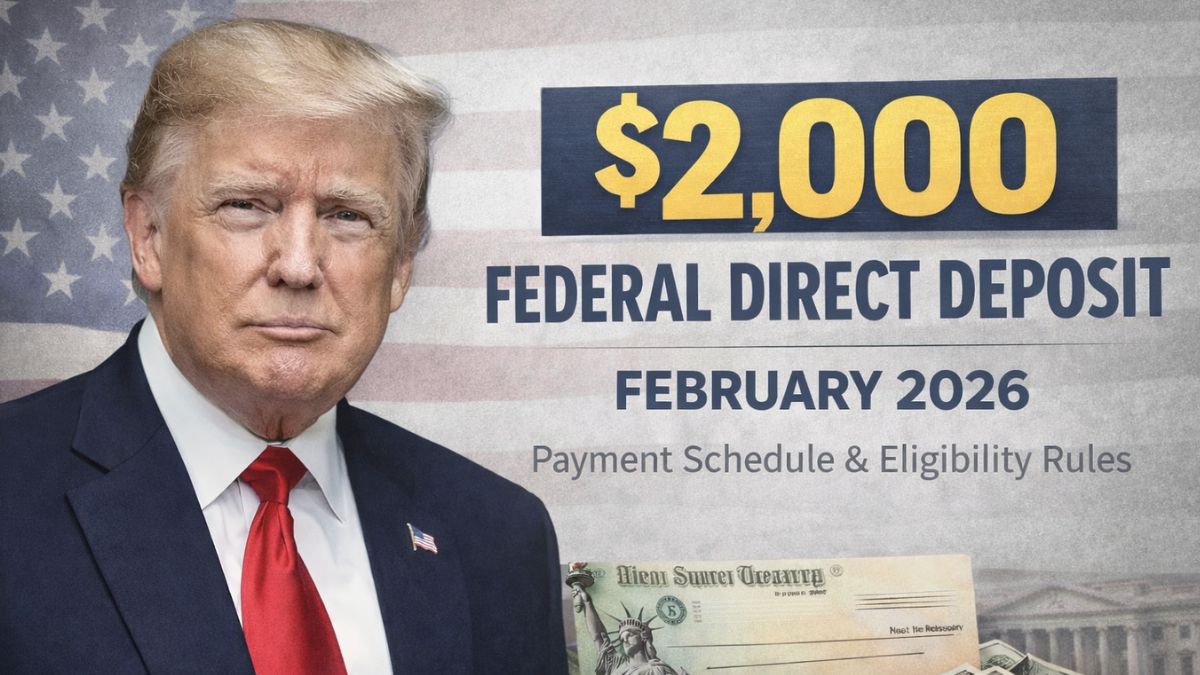
Across the United States, there is growing discussion about a possible $2,000 federal direct deposit that could arrive in February 2026. Many people are hearing about this payment and wondering whether it is real, who might qualify, and how it would be delivered. The idea behind this proposed payment is not the same as the emergency stimulus checks issued during the pandemic years. Instead, it is being described as targeted financial relief designed to reach households that are still under pressure from high living costs.
Even though inflation has slowed compared to earlier peaks, everyday expenses remain high. Rent, groceries, insurance, transportation, and medical care continue to stretch household budgets. Because of this, policymakers have discussed using existing government payment systems to deliver limited, focused support rather than launching a brand-new nationwide stimulus program.
What This Proposed $2,000 Payment Is Based On
Current reports describe this possible payment as a relief measure that would move through systems already used by the federal government. Instead of creating a new application program, officials would rely on tax return records and benefit payment databases that already exist. That means people who recently filed taxes or who receive federal benefits may already be in the pool of potential recipients.
यह भी पढ़े:
 February 2026 Social Security, SSDI, and Federal Deposit Updates: What Beneficiaries Should Know
The main purpose of using existing systems is speed and accuracy. When agencies reuse verified records, they can send money faster and reduce paperwork problems. It also lowers the chance of duplicate or fraudulent payments. This approach is meant to be more efficient than building a completely new payment structure.
Why Financial Relief Is Being Considered Now
Many households are still feeling cost pressure even without extreme inflation headlines. Monthly budgets remain tight in many communities. Housing costs have increased in many regions, grocery bills are noticeably higher than a few years ago, and healthcare expenses continue to rise. Wage growth has helped in some sectors, but not always enough to fully offset higher living costs.
Because of these conditions, targeted relief is being discussed as a short-term support tool. The goal is to give certain households breathing room rather than to flood the entire economy with stimulus money. The focus is on stability and basic expense support instead of broad emergency rescue.

How This Payment Would Differ From Past Stimulus Checks
Pandemic-era stimulus checks were emergency payments sent to a very wide population during a national crisis. They were created through special legislation and rolled out as new programs. The proposed February 2026 payment would be different in structure and purpose.
This plan is described as narrower and more targeted. It would likely use income limits and benefit status to decide eligibility. Instead of universal payments, the support would be directed mainly toward lower and middle income households and people already connected to federal benefit programs. The design is more selective and budget-controlled.
Expected February 2026 Payment Timing
If approved and funded, the payment schedule would likely prioritize electronic delivery. Direct deposits would be expected to arrive first because they move through banking systems quickly. People with valid bank account details already on file from tax refunds or benefit payments would likely be first in line.
यह भी पढ़े:
 February 2026 Federal $2000 Deposit: Full Guide to Timing, Eligibility, and Payment Process
Paper checks would take longer because they must be printed and mailed. Prepaid debit cards could be used for people without bank accounts on record. Those typically arrive after direct deposits but sometimes before paper checks depending on processing flow.
Overall timing estimates place the first wave of deposits in early to mid-February 2026, with later delivery methods extending toward late February or early March.
Who May Be Eligible Under Expected Rules
Eligibility would probably not be universal. Instead, qualification would be based on existing records and income limits. Likely qualifying groups may include recent federal tax filers, Social Security retirees, disability benefit recipients, SSI recipients, certain veterans receiving federal payments, and low to moderate income workers.

Income thresholds would likely determine whether someone receives the full amount, a partial amount, or nothing. Higher earners would likely be reduced out of the program. This structure follows the same pattern used in many tax credits and prior relief efforts.
Because existing records would be used, most eligible people would not need to fill out new forms.
How the Money Would Be Delivered
Electronic transfer would almost certainly be the primary delivery method. Direct deposit into a bank or credit union account is the fastest and most secure option. If a taxpayer previously received a refund through direct deposit, the same account would likely be used again.

If no banking information is available, a prepaid government debit card could be mailed. Paper checks would serve as a fallback option when electronic delivery is not possible. While slower, these methods ensure that unbanked households can still receive funds.
Correct and current account information is critical. Outdated bank details are one of the biggest causes of payment delays.
What People Should Do Now
Even if payments are automatic, preparation helps avoid problems. Filing any missing recent tax returns is important because tax data may be used to confirm eligibility and payment details. Keeping mailing addresses and bank information updated with federal agencies also reduces the risk of delay.
यह भी पढ़े:
 Money Arriving in February 2026: What Social Security and SSDI Beneficiaries Should Understand
People should rely only on official announcements and trusted government sources for updates. Whenever public interest grows around government payments, scam messages and fake websites appear. Real agencies do not charge fees to release payments and do not ask for sensitive data through random texts or emails.
Economic Impact of a Targeted Payment
A targeted payment program is designed more to stabilize households than to dramatically boost the overall economy. Most recipients would likely spend the funds on essentials such as housing, utilities, groceries, and medical bills. Some may use part of the money to reduce debt or build small savings.
Because lower and middle income households tend to spend relief funds quickly, local businesses may see some benefit. Still, the main goal is household support rather than large-scale economic stimulus.

Final Perspective
The proposed $2,000 February 2026 direct deposit is being discussed as focused relief delivered through existing federal systems. It is meant to be faster and more targeted than past stimulus programs. Eligibility would likely depend on income and benefit status, and most payments would be automatic for qualified recipients. While not guaranteed, the plan reflects ongoing concern about the financial strain many households continue to face.
Disclaimer
This article is for informational purposes only. There is currently no final official approval or confirmed nationwide rollout of a $2,000 federal direct deposit for February 2026. Payment amounts, eligibility rules, and timelines may change based on government decisions. Readers should rely on official government sources and qualified professionals for the most accurate and up-to-date information.